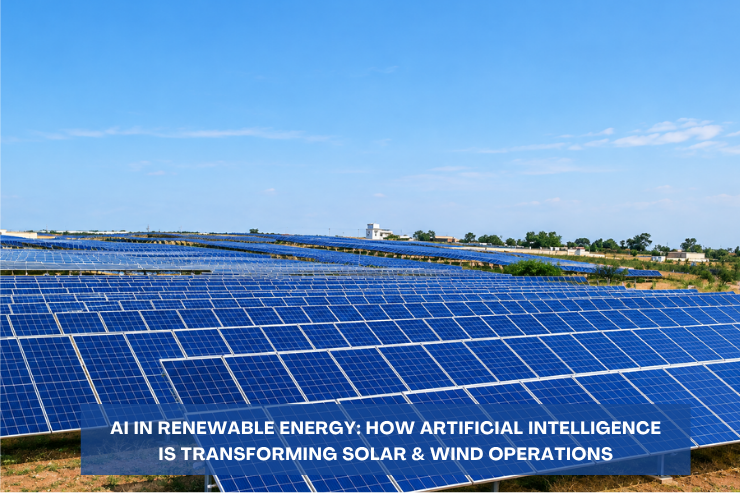


Solar and wind assets generate operational data that can support monitoring, forecasting, and maintenance activities. AI in Renewable Energy is adding new ways to analyze this information, helping operators identify patterns and make more informed decisions about asset performance. As renewable portfolios expand, technologies such as data analytics, artificial intelligence, and machine learning are becoming increasingly relevant to asset management. At Hero Future Energies, we adopt these technologies to make our operating assets smarter and maximize their utilization and performance.
How AI Is Transforming Solar Energy Operations
Solar plants generate operational information that can support performance monitoring and maintenance. Technologies such as data analytics, AI, and ML can help operators use this information to improve asset performance.
Some important applications of this renewable energy technology include:
- Generation Forecasting: Forecasting can help renewable-energy operators anticipate changes in generation and plan operations accordingly. HFE specifically identifies forecasting as part of its technology-enabled approach to improving asset productivity.
- Performance Monitoring: Data analytics can help operators assess renewable-asset performance and identify areas that may require attention. HFE uses technology to improve asset productivity and maximize the utilization and performance of its operating assets.
- Asset Monitoring: Data analytics can help teams identify performance patterns and assess operating assets. This can provide useful information for investigating potential performance issues and determining appropriate operational or maintenance action.
- Predictive Maintenance: Predictive maintenance can help operators identify potential maintenance needs and plan interventions. HFE specifically highlights predictive maintenance as a technology-enabled approach to improving asset productivity.
Together, these applications can help solar operators understand asset performance and make informed operational decisions. AI-based analysis can also support engineering teams in using large volumes of data more effectively.
Also Read : What is Solar Energy: Types, Uses and Benefits
How AI Is Improving Wind Energy Operations
Wind assets generate operational information that can support performance monitoring, forecasting, and maintenance activities. AI in wind energy can help analyze large volumes of information and support data-driven asset management.
Key applications in wind operations include:
- Power Forecasting : Forecasting can help operators anticipate changes in renewable generation and support operational planning. HFE identifies forecasting as one of the technology-enabled approaches it uses to improve asset productivity.
- Turbine Monitoring : Data analytics and digital technologies can help operators monitor wind-asset performance and identify patterns that may require further assessment. HFE adopts data analytics, AI, and ML to make operating assets smarter and improve their utilization and performance.
- Asset Performance Analysis : Data-driven analysis can provide teams with additional information about asset performance and help inform maintenance activities.
- Maintenance Planning : Predictive maintenance can support the identification and planning of maintenance needs. HFE uses technology-enabled predictive maintenance as part of its approach to improving asset productivity.
Together, these technologies can support more informed asset-management decisions. Data analytics, artificial intelligence, and machine learning can make operating assets smarter and maximize their utilization and performance.
Read More : Wind Energy Systems: Exploring Conversion Methods and Power Generation
How AI Helps Manage Variable Solar and Wind Output
Solar and wind generation can vary with resource conditions. Forecasting and data-driven technologies can help operators anticipate changes in renewable output and make more informed operational decisions.
An energy management system can help coordinate renewable generation and energy storage based on operational requirements. HFE’s energy-storage solutions support applications including capacity firming, PV smoothing, peak power, and reducing scheduling and forecasting errors.
How AI Supports Solar and Wind Grid Integration
Forecasting becomes increasingly valuable as solar and wind capacity grows. HFE’s energy-storage solutions can support renewable integration while helping address challenges such as scheduling and forecasting errors.
AI in power sector applications can support renewable-asset management and operational planning, while energy storage can provide flexibility for integrating variable renewable generation. HFE offers storage solutions designed for applications such as capacity firming, PV smoothing, and energy shifting.
Keep Reading : Wind Energy in India: Growth, Opportunities & Future Potential
Challenges of Using AI in Solar and Wind Operations
Effective technology adoption requires appropriate evaluation, technical expertise, and collaboration. HFE explores emerging technologies through due diligence, proof-of-concept initiatives, and collaboration with domain experts.
Important areas to consider include:
- Technology Evaluation: Emerging technologies can be assessed through structured evaluation before wider adoption. HFE uses due diligence and proof-of-concept initiatives when exploring and adopting emerging technologies.
- Domain Expertise: Technology adoption also benefits from specialist knowledge and practical evaluation. HFE works with domain experts when exploring and adopting emerging technologies.
- Proofs of Concept: Testing technologies through proof-of-concept initiatives can help assess their suitability before broader implementation.
- Technical Expertise: HFE brings deep domain expertise across renewable-energy development, design, engineering, asset quality, and project execution. This expertise supports the evaluation and application of technologies across its operating assets.
- Continuous Innovation: HFE uses its Pilot Success Multiply methodology and collaboration with domain experts to explore and adopt emerging technologies.
Focusing on these areas can help renewable energy operators use AI effectively while supporting informed decisions across solar and wind assets.
Related Insights : Solar Energy vs Wind Energy: Key Differences
The Future of AI in Solar and Wind Operations
AI is changing how renewable-energy companies manage assets and optimize performance. At Hero Future Energies, we are adopting data analytics, AI, and ML to make our operating assets smarter and maximize their utilization and performance.
AI and other digital technologies can complement renewable generation and energy storage as the sector evolves. Our portfolio spans solar, wind, hybrid power, and energy storage, with storage solutions supporting applications such as capacity firming, peak power, and energy shifting.
Conclusion
Artificial intelligence is expanding the tools available for operating solar and wind assets. Through forecasting, performance monitoring, fault identification, maintenance planning, and energy management, AI can help teams interpret large volumes of operational data and turn them into useful insights. As renewable portfolios evolve, data analytics, AI, and ML can support smarter asset management and performance optimization. At Hero Future Energies, we continue to explore technologies that can contribute to the performance and productivity of our renewable-energy assets.
Frequently Asked Questions
What is AI in renewable energy?
It’s the use of data analytics, AI, and machine learning to make sense of the operational data solar and wind assets produce – helping operators spot patterns and make more informed calls on performance and maintenance.
How is AI used in solar energy?
In solar operations, it supports generation forecasting, performance monitoring, asset monitoring, and predictive maintenance – giving teams a clearer read on how a plant is performing and where attention is needed.
What is AI in wind energy?
For wind assets, AI feeds into power forecasting, turbine monitoring, performance analysis, and maintenance planning, turning large volumes of turbine data into insights operators can actually act on.
How does an AI-based energy management system work?
It coordinates renewable generation with energy storage based on real-time operational needs, using forecasting to anticipate shifts in output. At HFE, this underpins applications like capacity firming, PV smoothing, peak power, and reducing scheduling and forecasting errors.
Why is AI important in the power sector?
As renewable portfolios scale up, so does the volume of asset data. AI helps operators process that data efficiently and make better-informed decisions around generation, integration, and maintenance.
What are the benefits of AI in renewable energy?
It helps operators forecast generation more accurately, monitor performance continuously, catch issues earlier, and plan maintenance proactively – all of which add up to smarter, more efficient asset management.
Can AI improve renewable energy forecasting?
Yes – forecasting is one of the most mature AI applications in renewables. It helps operators anticipate changes in solar and wind output so they can plan operations and grid integration more effectively.
What challenges does AI face in renewable energy?
Getting real value from AI takes careful evaluation, domain expertise, and collaboration – not just adopting technology for its own sake. That’s why HFE relies on due diligence, proof-of-concept trials, and its Pilot Success Multiply methodology before scaling anything.
Is AI replacing human operators in renewable energy plants?
No – it’s meant to support them. AI helps engineering teams work through large volumes of data more effectively, but the decisions and on-ground actions still rest with people.
What is the future of AI in renewable energy?
Expect AI to work more closely alongside generation and storage as portfolios grow – helping companies like HFE continue making assets smarter and squeezing more utilization and performance out of them.