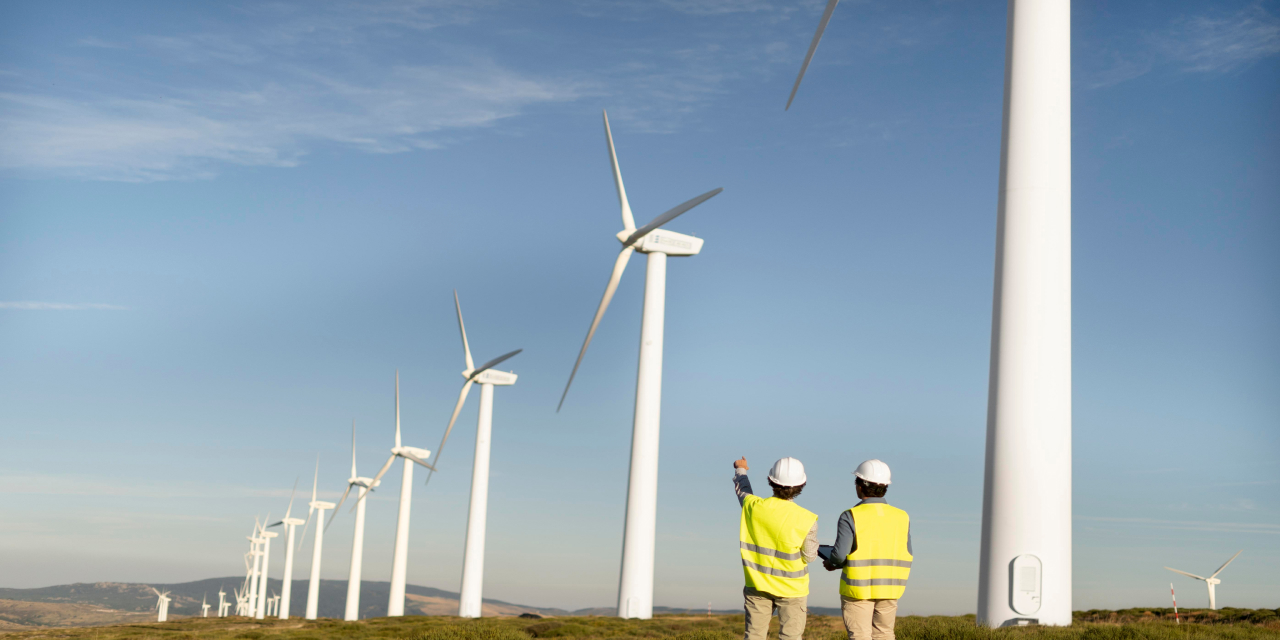
As the world accelerates its shift to clean energy, utility-scale wind power has emerged as one of India's most dependable and cost-competitive renewable energy sources. Harnessing the natural abundance of wind across Rajasthan, Karnataka, Maharashtra, Madhya Pradesh, Andhra Pradesh, and Telangana, large-scale wind power plants deliver reliable baseload-equivalent generation that complements solar and strengthens the overall renewable energy mix. Wind energy tariffs of ₹2.8–3.5 per kWh make it one of the most affordable power options available to discoms, SECI, and C&I offtakers today.
At Hero Future Energies, we have been at the forefront of India's wind energy journey since our inception. With 0.6 GW of commissioned wind capacity spanning 10 projects across 6 states, our wind portfolio has cumulatively contributed to 20.44 million tonnes of CO₂ mitigated till FY 2025–26 across Hero Future Energies’s total portfolio. Our 13+ years of proven expertise in utility-scale wind - backed by a team with 300+ years of cumulative domain experience - makes Hero Future Energies one of India's most trusted wind energy developers and operators.
Our core strengths lie in timely project delivery, unwavering focus on health, safety & environment (HSE) standards, developmental capabilities, stringent asset quality standards and design and engineering skills.
Hero Future Energies has a strong team of design and quality domain experts with 300+ years of cumulative experience that endeavours to:



With 300+ years of combined wind engineering expertise, we deliver rigorous, bankable wind resource assessment using IEC-standard methodologies and high-resolution mesoscale modelling. Our micro-siting strategies place turbines optimally for maximum energy yield while minimising wake losses, turbine fatigue, and noise impact - ensuring every MW of wind capacity performs above its P50 estimate.
Our 13+ year track record demonstrates exceptional capability in executing complex utility-scale wind projects on time and on budget across India's most demanding wind terrains - from the high-wind plains of Rajasthan and Maharashtra to the hilly corridors of Karnataka and Andhra Pradesh. We have maintained a 100% on-time delivery record and Zero major HSE incidents across our entire wind construction history.
Our state-of-the-art SCADA monitoring and AI-powered predictive maintenance systems achieve 98%+ turbine availability across our wind portfolio. We deploy vibration analytics, CMS (Condition Monitoring Systems), thermal imaging, and remote diagnostics to identify and resolve mechanical issues before they cause turbine downtime - consistently maximising Annual Energy Production (AEP) and project returns.
We structure utility-scale wind projects to deliver strong, predictable financial returns with long-term PPA security for diverse offtakers and investors. Our projects are backed by world-class institutional investors including IFC and KKR & Co., offering multiple wind power purchase models suited to government, state discom, and private corporate needs.
Hero Future Energies continuously invests in cutting-edge wind technologies to maximise turbine performance, extend asset life, and deliver superior returns for our partners and investors.
Modern utility-scale wind turbines with hub heights of 100–120 metres access significantly stronger and more consistent wind streams than earlier-generation turbines. At higher elevations above ground-level turbulence, wind speeds are faster, energy density is higher, and generation is more predictable - reducing P90 uncertainty and improving financing outcomes. Hero Future Energies deploys high hub-height turbines across our Rajasthan and Maharashtra” with “Karnataka, Andhra Pradesh, Telangana and Madhya Pradesh portfolios where terrain and boundary layer wind profiles dictate elevated placement for optimal energy extraction.
Advanced turbine control systems continuously optimise pitch angle, rotor speed, and yaw alignment in real time to extract maximum power from variable wind conditions. In multi-turbine wind farms, wake steering algorithms actively mitigate turbine-to-turbine wake interference - the leading cause of energy yield loss in utility-scale wind projects. By adjusting turbine yaw angles to redirect wake streams, our wind farms achieve 3–5% higher Annual Energy Production (AEP) compared to conventional fixed-control configurations. This technology is deployed across our Anantapur and Dhar wind projects to maximise energy capture throughout the project lifetime.
Machine learning algorithms and artificial intelligence enable real-time wind farm optimisation, predictive maintenance scheduling, and continuous turbine performance maximisation. Our AI-driven systems forecast daily wind energy generation with high accuracy using multi-layer atmospheric models, detect underperforming turbines before they impact total output, predict mechanical failures weeks in advance using vibration and thermal signatures, and automatically optimise operational parameters for peak efficiency across all wind assets. This intelligent approach to wind operations and maintenance reduces O&M costs, extends turbine life, and consistently improves plant performance across.
Supervisory Control and Data Acquisition (SCADA) systems provide 24/7 real-time visibility into wind turbine performance, equipment health, and wind farm operational status. These advanced monitoring systems track wind speed, direction, rotor RPM, power output, and vibration signatures for every turbine in our portfolio, enabling immediate detection and response to any anomaly. Web-based dashboards and mobile applications provide stakeholders with live wind farm data, historical performance analysis, and predictive insights for proactive O&M planning - ensuring full transparency, rapid incident response, and maximum uptime across every Hero Future Energies wind project.
Every MW of utility-scale wind energy we develop delivers measurable, lasting benefits for India's environment, communities, and climate commitments - contributing to a cleaner, lower-carbon India for future generations.
Hero Future Energies' utility-scale wind portfolio forms a significant part of the company's total renewable energy capacity, contributing to 2.2 million tonnes of CO₂ mitigated in FY 24–25 and a cumulative 20.44 million tonnes of CO₂ mitigated till FY 2025–26 across Hero Future Energies's full portfolio. Wind energy generation has one of the lowest lifecycle carbon footprints of any power technology - at approximately 7–15 gCO₂/kWh versus 820 gCO₂/kWh for coal-based power. Directly supports India's national renewable energy targets, NDC climate commitments, and the government's mission to achieve 500 GW of non-fossil fuel capacity by 2030.
Utility-scale wind energy generation offers an exceptionally low environmental footprint across its full lifecycle. Wind turbines consume zero water during power generation - a critical advantage in water-stressed regions like Rajasthan and Maharashtra where Hero Future Energies wind projects operate. Wind farms produce zero air pollution, no particulate matter, and generate no hazardous waste during operation. Our projects are designed to coexist responsibly with existing land uses through careful site selection, environmental impact assessments, and community consultation - land between turbines remains fully usable for agriculture and grazing. Hero Future Energies’s wind farms also maintain robust biodiversity management protocols, including bird and bat monitoring programmes, vegetation management, and habitat conservation measures at each project site.
Beyond environmental benefits, Hero Future Energies invests significantly in the communities surrounding our wind project sites. Our CSR programmes have positively impacted over 65,000 lives through education, skill development, healthcare, and water access initiatives around our project sites across Rajasthan, Madhya Pradesh, Maharashtra, Karnataka, Andhra Pradesh, and Telangana. Our Asha Education Centres bring quality learning to rural children, with a target to operate 100 Asha Centres by 2030 - educating approximately 3,000 rural children annually. Skill development centres at wind project sites have upskilled 1,000+ youth with vocational training in electrical, mechanical, and renewable energy operations. Our ESG commitment also includes planting 1,00,000+ trees by 2030 and achieving water-positive status by 2026.
Hero Future Energies maintains world-class environmental, social, and governance standards across all utility-scale wind projects. We are committed to achieving net-zero operations by 2030 and water-positive status by 2026. Our projects comply with stringent international environmental standards including IFC Performance Standards, biodiversity conservation protocols, responsible waste management, and soil preservation guidelines. Annual sustainability reports - published for FY 2019–20 through FY 2024–25 - document our verified progress toward ESG goals, with third-party audits of environmental metrics and social impact assessments. Our TCFD (Task Force on Climate-related Financial Disclosures) report reflects our transparent approach to climate risk management and governance.
Key ESG Targets (per Sustainability @ Hero Future Energies page):
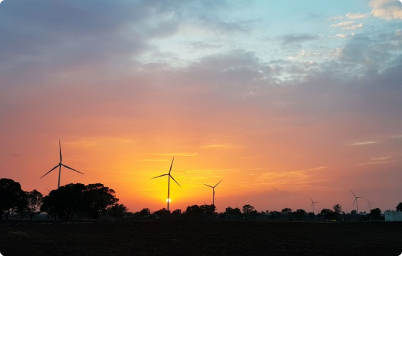 Dhar, Madhya Pradesh
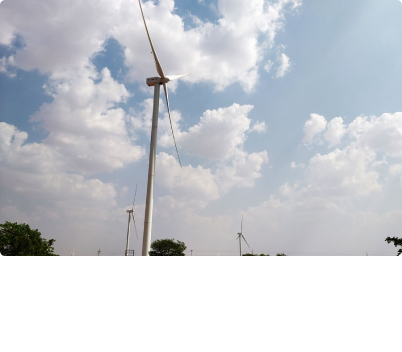 Anantapur, Andhra Pradesh
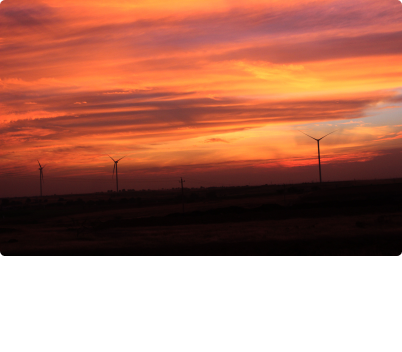 Bijapur, Karnataka
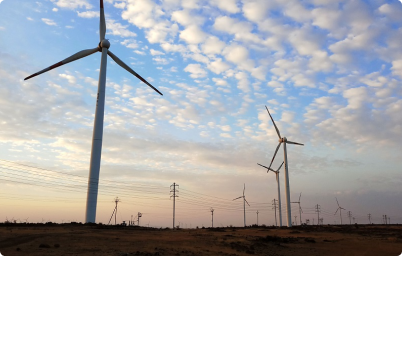 Satara, Maharashtra
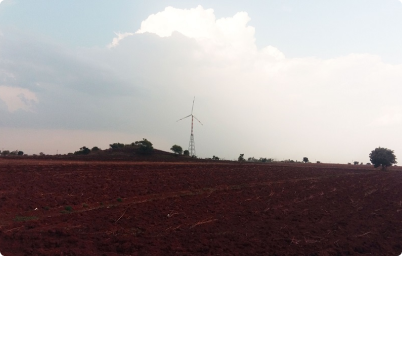 Sangareddy, Telangana
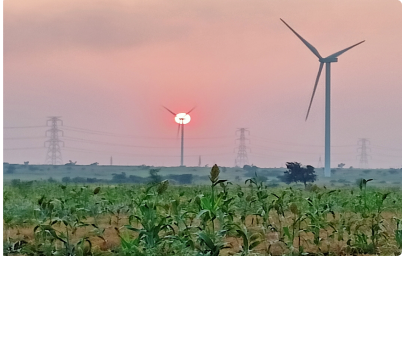 Bijapur, Karnataka
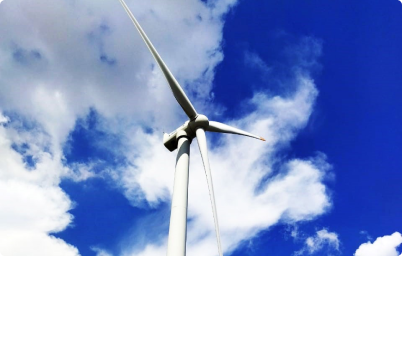 Sangli, Maharashtra
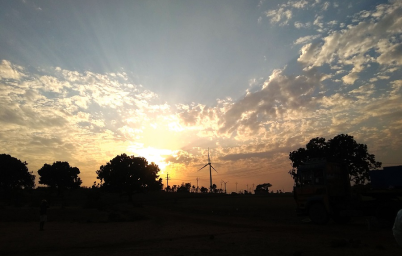 Pratapgarh, Rajasthan
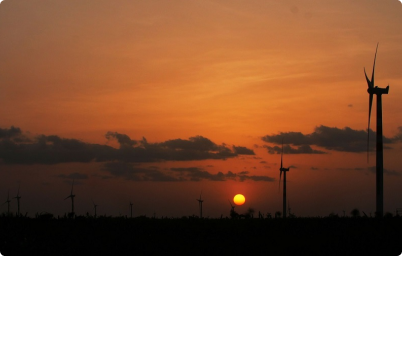 Jaisalmer, Rajasthan
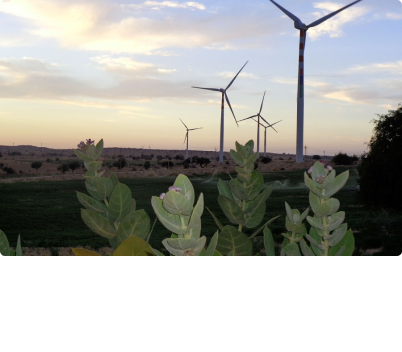 Barmer, Rajasthan