

Commercial and industrial (C&I) consumers have varied electricity requirements based on their size, equipment, and operating schedules. Renewable energy solutions allow businesses to source electricity from renewable resources while supporting their energy and sustainability goals. Businesses can consider onsite solar, offsite renewable power, wind-solar hybrid projects, and battery storage based on their needs. Understanding these options helps decision-makers identify an approach that aligns with electricity consumption, available space, location, and future energy plans.
What Are C&I Renewable Energy Solutions?
Commercial and industrial (C&I) renewable energy refers to solutions designed to meet the electricity needs of businesses and other commercial and industrial consumers. Renewable energy for businesses can include electricity generated onsite or sourced from an offsite renewable energy project.
Onsite systems generate electricity at the consumer’s premises, while offsite projects deliver renewable electricity through the grid under applicable arrangements. Businesses can also combine solar and wind generation or integrate energy storage to create an energy configuration aligned with their operating requirements.
What Renewable Energy Options Are Available for C&I Consumers?
C&I consumers can integrate renewable power through different models. The appropriate option depends on consumption patterns, available space, project scale, location, and operational requirements. At Hero Future Energies, we offer customized renewable energy solutions for C&I consumers, including onsite and offsite options, hybrid power, and energy storage.
Common options available to commercial and industrial consumers include:
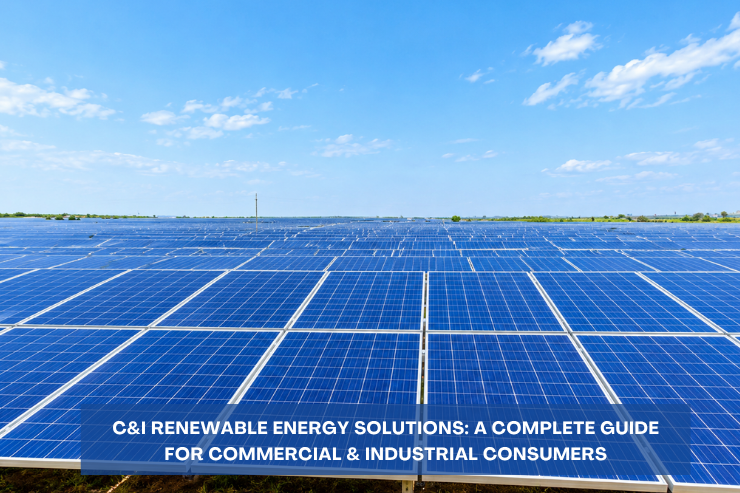
- Onsite Solar Power: Businesses can install rooftop, ground-mounted, floating, or carport solar systems at suitable locations. These commercial solar panels generate electricity close to the point of consumption. Using solar energy for business operations can help meet part of a facility’s electricity requirements when solar generation is available.
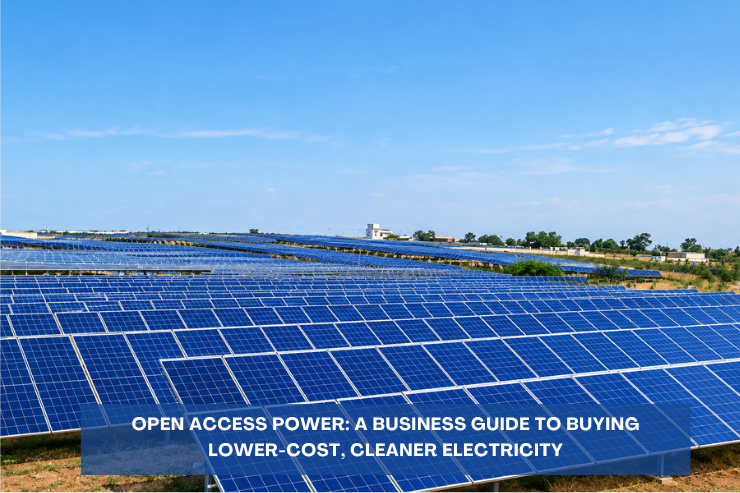
- Offsite Renewable Power: Businesses can source renewable electricity from solar or wind projects located off-site. Depending on the applicable framework, commercial solar solutions can include open-access arrangements that deliver electricity from an offsite project through the grid.
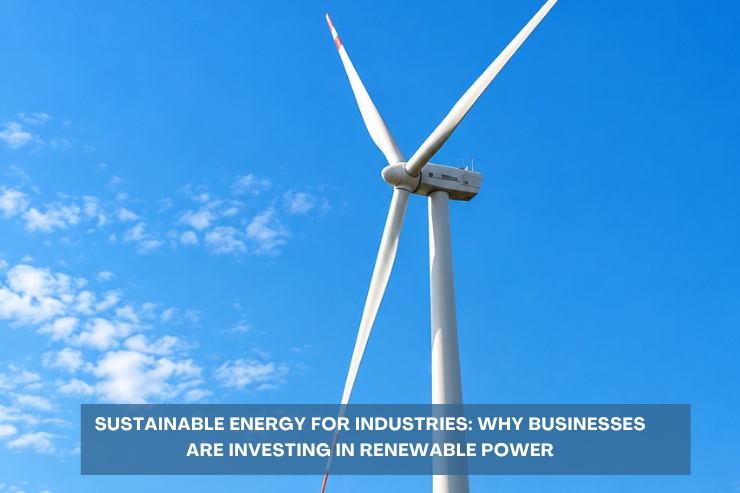
- Wind-Solar Hybrid Power: Hybrid projects combine solar and wind generation in a single energy system. Their distinct generation profiles can complement each other over time. For facilities considering industrial solar power, a hybrid configuration can combine both sources in a single renewable-energy strategy.
- Battery Energy Storage: Battery energy storage systems store electricity for later use. They can support energy shifting, peak-demand management, renewable integration, and backup power, making them a useful component of broader clean energy solutions for C&I operations.
Together, these options allow businesses to select or combine technologies according to their electricity requirements, operating schedules, available resources, and energy objectives.
As per the latest industry data How Renewable Energy is Transforming Electric Grids Worldwide
Onsite vs. Offsite Renewable Energy: What Is the Difference?
Onsite and offsite renewable energy provide different approaches to sourcing renewable electricity. Their key distinctions involve project location, available space, scale, and electricity delivery.
| Factor | Onsite Renewable Energy | Offsite Renewable Energy |
| Location | At or near the consumer’s premises | At a separate project location |
| Space | Uses suitable space available onsite | Uses an external project site |
| Electricity Delivery | Generated close to the point of consumption | Delivered through the electricity grid |
| Scale | Capacity depends on available site area and energy needs | Capacity depends on project design, energy requirements, grid availability, and applicable regulations |
| Common Options | Rooftop and ground-mounted solar | Solar, wind, and wind-solar hybrid projects |
Businesses can evaluate these models based on their consumption profile, available site area, project capacity, location, and applicable energy regulations.
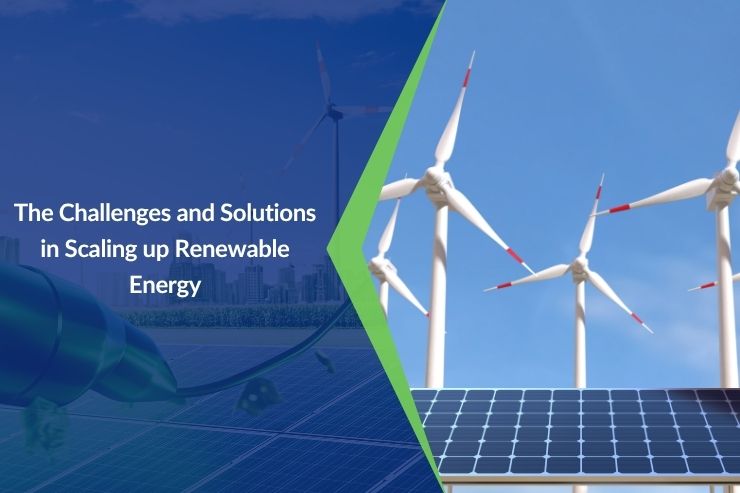
For more insights on Challenges and Solutions in Scaling up Renewable Energy
How Can C&I Consumers Choose the Right Renewable Energy Solution?
Selecting renewable energy solutions starts with understanding a facility’s electricity requirements. Businesses can assess technical, operational, commercial, and regulatory factors before choosing an appropriate configuration.
Important factors to consider include:
- Electricity Consumption: Historical electricity data helps businesses understand their overall demand and estimate a suitable renewable energy capacity.
- Load Profile: A load profile shows how electricity consumption changes throughout the day, helping businesses align generation with operating patterns.
- Available Space: Rooftops, land, parking areas, and other suitable spaces can determine the potential size of an onsite renewable project.
- Location: Solar resources, wind conditions, site characteristics, and grid infrastructure can influence technology and project selection.
- Project Scale: The planned capacity can reflect current consumption, operating schedules, facility size, and expected future electricity requirements.
- Regulatory Framework: Grid connectivity, open access, metering, and approval requirements can guide the planning of onsite and offsite projects.
- Storage Requirements: Businesses can assess battery storage when their energy strategy includes energy shifting, peak management, renewable integration, or backup power.
Considering these factors together can help businesses identify an energy configuration suited to their operational and long-term requirements.
What Should C&I Consumers Consider Before Implementation?
Once a suitable energy model is identified, businesses can focus on technical planning and project execution. Each stage contributes to effective implementation.
Key considerations during implementation are:
- Energy Assessment: Electricity bills, consumption data, peak demand, and operating schedules can help determine project capacity and configuration.
- Site Feasibility: Onsite assessments can review usable space, structural suitability, shading, access, and existing electrical infrastructure.
- Project Design: System capacity, equipment, generation profile, electrical configuration, and storage can be aligned with expected energy consumption.
- Approvals and Connectivity: Applicable permissions, grid-connectivity procedures, metering arrangements, and regulatory requirements can be included in project planning.
- Installation and Commissioning: Engineering, procurement, construction, testing, and commissioning can move the selected system from design into operation.
- Performance Monitoring: Generation and system-performance data can support ongoing energy management, maintenance planning, and operational assessment.
At Hero Future Energies, we work across onsite and offsite renewable power, wind-solar hybrid solutions, and energy storage for C&I consumers with varied energy transition requirements.
Conclusion
C&I renewable energy gives commercial and industrial consumers several ways to plan electricity sourcing around their operational and sustainability goals. Onsite solar can serve facilities with suitable space, while offsite projects can support additional energy requirements through grid-connected arrangements. Wind-solar hybrid systems and battery storage can further expand the available energy mix. Selecting an appropriate model involves assessing technical feasibility, energy demand, regulatory requirements, and long-term operational priorities. Careful evaluation can help businesses choose an approach that aligns with their energy needs and plans.
Frequently Asked Questions
1. Why should businesses invest in renewable energy?
Businesses can use renewable energy to diversify electricity sourcing, support sustainability goals, and manage long-term energy requirements. The right solution depends on consumption, location, and operational needs.
2. What are commercial solar solutions?
Commercial solar solutions generate renewable electricity for businesses using systems such as rooftop, ground-mounted, floating, or carport solar. They can be deployed onsite or sourced through suitable offsite arrangements.
3. How do commercial solar panels work?
Commercial solar panels convert sunlight into electricity through photovoltaic cells, which can then be used by the business or supplied to the grid under applicable arrangements.
4. Is industrial solar power suitable for manufacturing plants?
Yes, industrial solar power can support manufacturing plants with suitable space and solar resources. System capacity should be evaluated based on electricity demand, load profile, site conditions, and grid requirements.
5. What is the difference between rooftop solar and open access solar?
Rooftop solar generates electricity at the consumer’s premises, while open access solar typically sources renewable power from an offsite project through the electricity grid. The applicable regulatory framework determines how each model is implemented.
6. What are the main renewable energy options for C&I consumers?
The main options include onsite solar, offsite renewable power, wind-solar hybrid projects, and battery energy storage. Businesses can select or combine these based on their electricity needs and operating requirements.
7. What factors should businesses consider when choosing renewable energy solutions?
Businesses should assess electricity consumption, load profile, available space, location, project scale, grid infrastructure, regulations, and storage requirements before selecting a renewable energy solution.
8. What is the difference between onsite and offsite renewable energy?
Onsite renewable energy is generated at or near the consumer’s premises, while offsite renewable energy is generated at a separate project and delivered through the electricity grid under applicable arrangements.