

The growth of cloud computing and artificial intelligence (AI) is increasing electricity demand at green data center. As operators expand their facilities, they must secure dependable power while managing electricity costs and emissions.
These centers combine energy-efficient design with renewable electricity to cut their carbon footprint. For operators, the challenge is to reduce energy use without compromising the continuous power needed for digital services.
What Makes a Data Center Energy-Efficient?
Below are the basics for proper understanding of data center and what makes it energy efficient.
- Understanding the Concept of a Green Data Center: It runs on renewable power and uses efficient servers, cooling, and power systems to cut emissions and resource use.
- Green Data Center vs Traditional Data Center: Traditional facilities often rely on fossil-heavy grid power and air cooling, while sustainable ones use renewables and advanced cooling.
Why Are Big Tech Companies Switching to Green Data Centers?
Electricity demand, corporate commitments, and procurement costs all influence investment. Below are the main factors that drive this shift:
- Rising Data Center Power Consumption: The International Energy Agency estimated that data centers used 415 TWh in 2024, about 1.5% of global electricity. Its 2026 assessment projects around 950 TWh by 2030, with substantial uncertainty around AI adoption and efficiency.
- Achieving Corporate Net Zero and ESG Goals: Renewable power helps meet environmental, social, and governance (ESG) targets. Google, for example, has set a goal of operating on 24/7 carbon-free energy by 2030.
- Long-Term Energy Cost and Security: Long-term renewable contracts stabilize prices and reduce fossil fuel exposure.
Key Features of a Green Data Center
A well-designed facility addresses energy sourcing and equipment efficiency together. Core features include:
- Renewable Energy-Powered Infrastructure: Operators source solar and wind power through open access and power purchase agreements (PPAs).
- Energy-Efficient Cooling Systems: Liquid and advanced cooling cut the energy needed to keep servers cool.
- Smart Energy Management Systems: AI tools monitor loads, adjust cooling, and improve power usage effectiveness (PUE).
How Renewable Energy Powers Green Data Centers
A mix of electricity sources can meet different operating requirements:
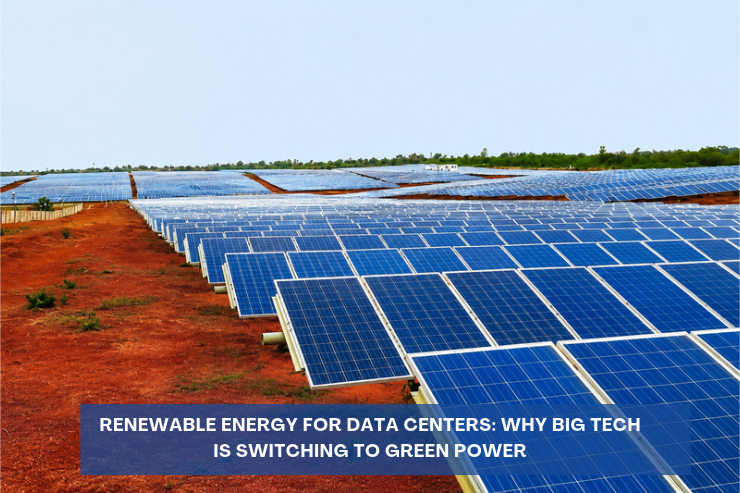
- Solar Energy for Data Centers: Rooftop systems cover part of onsite demand, while solar farms supply larger volumes.
- Wind Energy for Data Centers: Wind farms supply power under long-term deals, often at night.
- Hybrid Renewable Energy Solutions: Combining solar, wind, and battery storage can provide round-the-clock (RTC) power for continuous operations.
For commercial and industrial customers seeking firm renewable supply, Hero Future Energies offers solar-wind hybrid open access and round-the-clock power solutions. Contract structure and the local electricity system determine the share of demand such arrangements can cover.
Read more about Renewable Energy in India
Key Benefits of Green Data Centers
These measures can offer benefits when the facility and procurement strategy are carefully designed:
- Lower Emissions: Renewables cut operational emissions.
- Smaller Footprint: Designs save energy and water.
- Higher Efficiency: Better cooling lowers PUE.
- Stronger ESG Performance: Clean power strengthens disclosures.
- Less Grid Dependence: Dedicated renewables reduce conventional power use.
- Cost Stability: Fixed-price PPAs stabilize budgets.
- Better Reputation: Climate action builds stakeholder trust.
Challenges in Building Green Data Centers
Below is the list of common challenges include:
- High Initial Investment: Efficient equipment and renewable integration need significant capital.
- Continuous Power Supply Requirements: Solar and wind output varies, and facilities need storage and backup.
- Infrastructure and Grid Limitations: Transmission limits, storage costs, and procurement rules can slow sourcing.
Future of Green Data Centers and Renewable Energy
These measures can offer benefits when the facility and procurement strategy are carefully designed:
Battery storage, liquid cooling, and more efficient IT hardware may become increasingly important. Their financial and environmental value will depend on local power prices, equipment requirements, and operating practices.
- Increasing Demand for Sustainable Digital Infrastructure: India’s installed data center capacity reached 1.57 gigawatts (GW) by August 2026 and could approach 8 GW by 2030.
- Renewable Energy Opportunities for Indian Data Centers: Open access and group captive solar and wind help operators build a green data center in India.
For more insights on Examples of Renewable Energy Sources Explained
Green Data Centers vs Traditional Data Centers
The distinction is useful, but energy use and emissions should be assessed for each facility:
| Parameter | Green | Traditional |
| Energy Source | Renewable power | Fossil-heavy grid power |
| Electricity Consumption | Optimized | Higher |
| Cooling Technology | Liquid and advanced cooling | Conventional air cooling |
| Carbon Emissions | Lower | Higher |
| Energy Efficiency | Lower PUE | Higher PUE |
| Environmental Impact | Reduced | Significant |
Conclusion
Rising electricity demand from AI and cloud services has made clean power essential for the technology industry. A green data center combines renewable electricity with efficient design, helping companies grow digital infrastructure while cutting emissions and protecting valuable natural resources.
Investing in renewable power also brings long-term cost stability and stronger ESG performance. As demand keeps rising, data center operators that secure solar, wind, and hybrid supply early will be better positioned for sustainable, reliable, and competitive growth over time. Connect with our team to discuss renewable power options for your data center’s operating profile and reliability requirements.
Frequently Asked Questions
1. Why are big tech companies switching to Green Data Centers?
Technology companies face growing electricity demand and emissions commitments, making lower-carbon power procurement increasingly important.
2. How does renewable energy support data center sustainability?
Renewable power replaces fossil-based electricity, cutting the carbon emissions from running servers and cooling systems.
3. What is the role of solar energy in Green Data Centers?
Solar supplies daytime power through rooftop systems and large offsite plants connected under long-term agreements.
4. What are the main challenges of building a Green Data Center?
Key challenges include high upfront costs, intermittent renewable supply, storage needs, and grid capacity limits.
5. What is the future of Green Data Centers in India?
New facilities and increased computing demand could create significant opportunities for renewable power procurement in India.
6. How do Green Data Centers reduce data center power consumption?
They use efficient servers, advanced cooling, and AI-based energy management to lower total electricity use.
7. What is the difference between Green Computing and a Green Data Center?
Green computing covers eco-friendly practices across all IT, while data centers apply them within one facility.